Pilots who love flying.
Teaching pilots who will.
Every CAFS flight instructor is an active pilot — not an ex-pilot. Some fly airline line operations, most fly general aviation, a few do both. The common thread isn't where they fly — it's that they still choose to, every week, because they love it.
A CFI who doesn't love flying can teach what the book says.
An instructor who still chooses the cockpit every week
teaches what the book leaves out — and you only figure
that out on the day weather, fatigue, or a mistake tests you.
The instructor who
oversees every
check ride.
Leads the CAFS training department under CAAP Air Training Organization Certificate No. 84-11. Curriculum design, instructor oversight, safety management, and check-ride review — every recommendation for a license or rating passes through his desk. Brings real-world flying judgment into every lesson: not "what the textbook says," but "what actually happens when the weather turns, the engine roughens, or a student freezes on short final."
The instructors
on the teaching roster.
Every name below is on the CAAP Air Training Organization Certificate No. 84-11. Public record. Verifiable. Each instructor's license number is published so regulators, airlines, and applicants can confirm qualifications directly.
What every student
can verify.
We don't publish team size. Instructor rosters shift as we hire. What stays constant are the standards — these are independently verifiable through CAAP records and training logs.
Why who teaches you
matters more than what.
Curricula are standardized. Instructors are not. The gap between schools is almost always the humans in the right-hand seat.
No ex-pilot teaching from memory. Every CAFS instructor is an active commercial pilot — general aviation, airline, charter, or mixed operations. What they teach is what they still do, not what they used to do.
We don't favor one background. Airline captains bring procedural discipline and multi-crew coordination. GA captains bring single-pilot decision-making, short-field skill, and weather judgment — often harder-won. Your training benefits from both.
Students are paired with a primary CFI who stays with them through the program. No handoffs between strangers mid-training. Your instructor knows your weak spots by week three and can target them.
Capt. Daryl Lester C. Ancheta, Head of Training, personally signs off on every student's first solo, cross-country, and final check ride. Training standards are not delegated. This is how a 46-year zero-accident record is maintained.
Built into the daily workflow.
Not memory. Not paper.
Forty-six years taught us that instructor decisions and student handoffs can't depend on hallway conversations or paper checklists. So we built our own platform. Every CAFS CFI operates from Kryvox — our in-house flight school OS — where every GO/NO-GO decision is gated by software and every handoff carries full context. The standards above become operational, not aspirational.
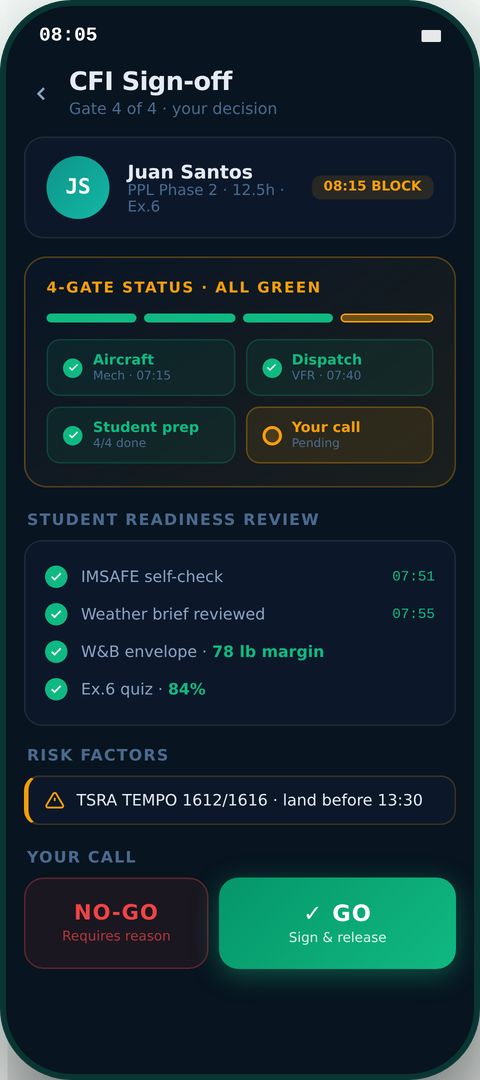
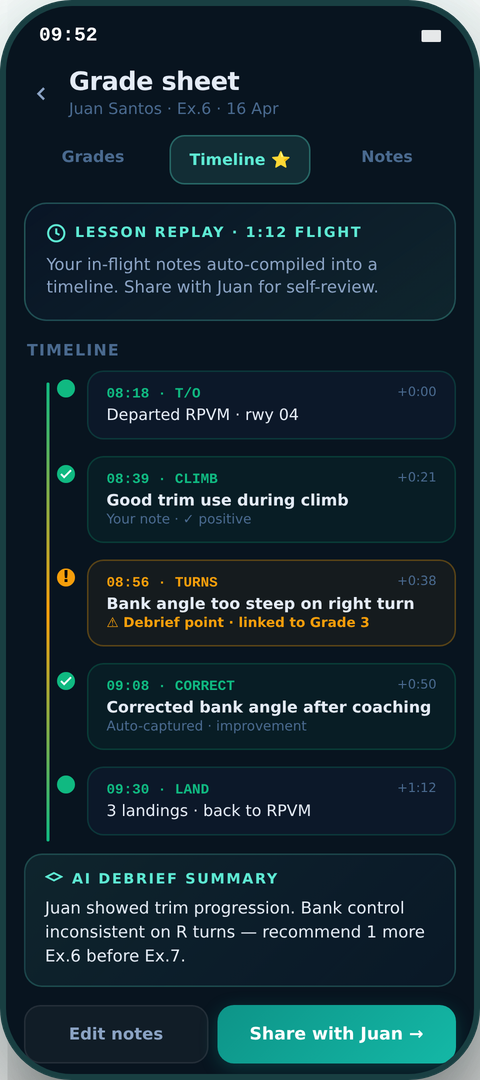
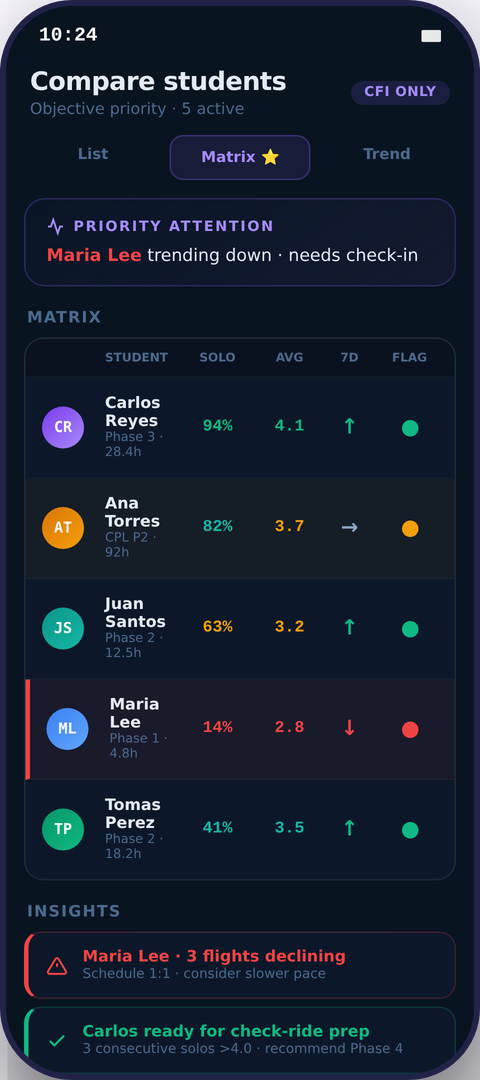
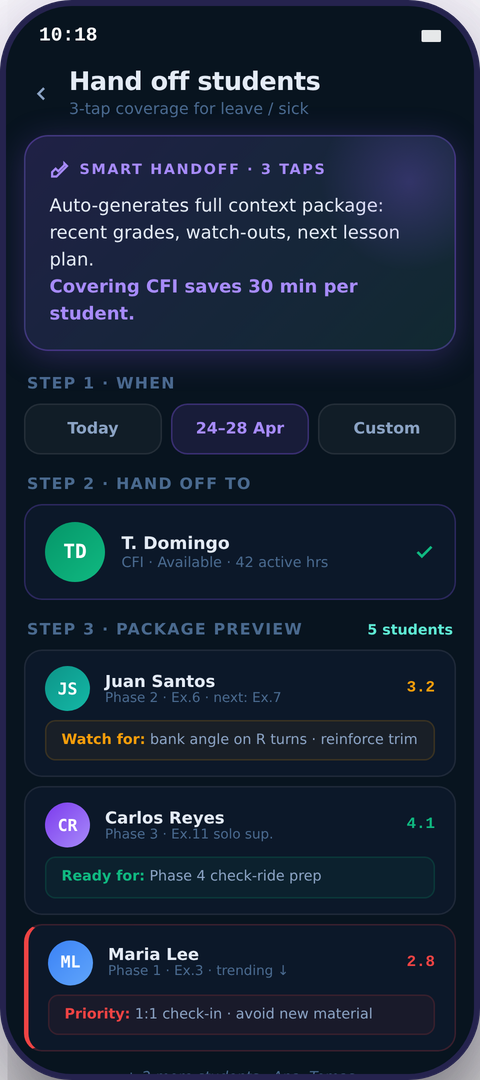
Credentials show
what we can do.
These show why we do it.
You can hire a pilot by flight hours alone. You cannot teach from hours. Teaching requires something else — the reason someone became a pilot in the first place. Here's what our instructors say about that reason, in their own words.
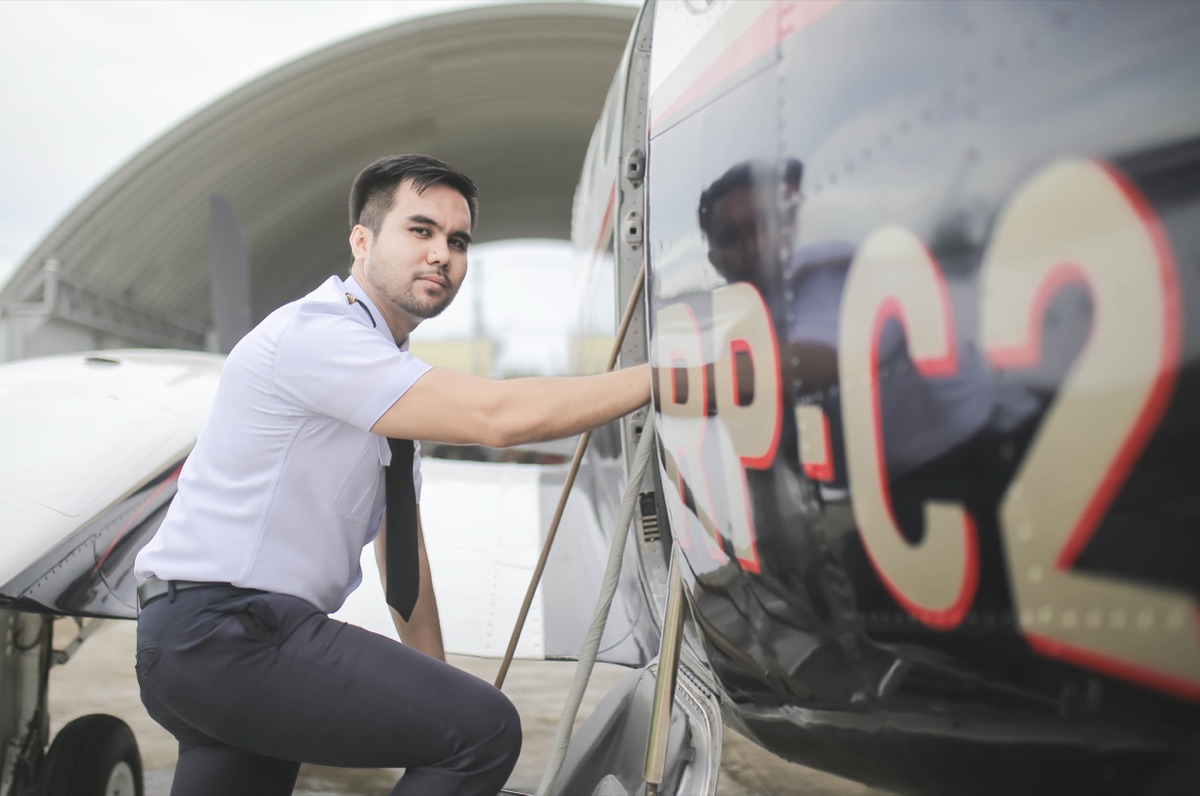
I still remember my first solo at sunrise over Lapu-Lapu. Twenty years later, I still chase that feeling — doesn't matter whether it's a 737 or a Cessna 172. I want every one of my students to feel it too. That's the whole reason I teach.
— Capt. Wollen E. Ugat · Chief Ground Instructor · CAAP 105726-GI
People assume big aircraft is harder. Most of the time it's systems and procedure. A Cessna in a gusty crosswind over a short grass strip — that's where you find out if you can actually fly. I teach because I want students to know the difference before their first check ride.
— CAFS Senior Flight Instructor
My father asked why I stayed in general aviation instead of going to the airlines. I told him: because flying an airliner and flying a small plane are two different kinds of love — and mine has always been for the small one. Every student I teach inherits that.
— CAFS Senior Flight Instructor
I was born in a town under the Cebu approach path. I watched every plane overhead from the time I could walk — turboprops, piston singles, the occasional jet. Every one of them was a miracle to me. Teaching at MCIA is the life I was always heading toward.
— CAFS Flight Instructor
The book teaches you to fly the numbers. Single-pilot IFR in tropical weather teaches you to fly the airplane. That's a skill you only build from being there, alone, with the rain on the windshield and the procedure still to complete. That's what I pass on.
— CAFS Flight Instructor
Aviation isn't a career. It's a language you speak with your whole body — hands on the yoke, feet on the rudders, eyes outside. That language is the same in a trainer or a jet — different dialect, same meaning. I want to pass it on.
— CAFS Flight Instructor
The difference between an adequate pilot and an outstanding one is love. You can drill procedures forever, but you can't fake the instinct to read weather, trust a crosswind, listen to an engine. That comes from wanting to be there — in any cockpit, at any altitude.
— CAFS Flight Instructor
Quotes shown as placeholder samples for visual approval · Final quotes pending individual CFI sign-off · Attribution kept to role only (no individual names) in line with privacy-first approach
Great instructors are rare.
We're still looking for a few.
We don't hire flight instructors by pedigree — we hire by passion and capability. Active commercial pilots from any background — general aviation, charter, cargo, bush operations, or airline — who still love the cockpit and want to teach the next generation. If that describes you, or someone you know, we'd like to start a conversation.
Requirements: active CAAP commercial license, CFI endorsement, and genuine passion for teaching. Background — general aviation, airline, or mixed — is less important than capability and currency. Part-time arrangements considered for active line pilots who want to teach on the side.
Three pages that define
how we operate.
46 years of pilot training. 1980 founding. 1984 CAAP certification. 2012 MCIA relocation. The timeline you can verify.
Zero training accidents in 46 years. How it's maintained, verified, and why instructor accountability is central.
CAAP 84-11 · ICAO alignment · Airline MOUs · FAA/EASA bridge pathways. Documents behind the claims.
Common questions
about who teaches here.
Meet your primary instructor
on your first flight.
Every cadet is matched with a lead CFI from day one. Apply to the program or book a Discovery Flight to meet the team before you enroll.