recorded training accidents in 46 years of CAFS operations.
CAAP Air Agency Certificate No. 84-11 · Accredited since 1984 · Plaque of Recognition, 2019
Safety at Continental Aero is not a marketing claim. It is a record — certifiable, auditable, and continuous across forty-six years of operation. Every flight begins with a dispatch clearance. Every student begins with a checklist. Every instructor begins their career having already demonstrated the discipline we teach.
A history you can verify,
not a story we tell.
Continental Aero's full operating history, from founding to present day. Each milestone is a matter of public record with the Civil Aviation Authority of the Philippines.
 CAAP · Plaque of Recognition Issued March 2020
 Regulator Recognition
The Philippine regulator verified it.
In 2019, the Civil Aviation Authority of the Philippines presented Continental Aero with a Plaque of Recognition for maintaining a zero-accident training record across the 2015—2019 audit period. This is the Philippine regulator's formal acknowledgement — not a self-reported claim.
The record has continued uninterrupted through 2026.
CAAP maintains the Approved Training Organization (ATO) register as public record. Continental Aero is listed under Certificate No. 84-11, active since 1980.
A system, not a slogan.
Continental Aero operates under the four-pillar Safety Management System framework defined by ICAO and adopted by CAAP. Each pillar is audited, documented, and reviewed in continuous cycles.
Safety Policy & Objectives
Written safety policy signed by the accountable executive. Clear roles, responsibilities, and an emergency response plan activated for any reportable occurrence. Reviewed annually, published internally, and posted visibly in the hangar.
Safety Risk Management
Hazards identified through instructor reports, student reports, flight data review, and maintenance findings. Each hazard is assessed for severity and likelihood, mitigated to acceptable levels, and tracked to closure in the Kryvox SMS register.
Safety Assurance
Continuous monitoring of training operations, maintenance quality, and dispatch compliance. Internal audits quarterly, CAAP surveillance annually. Every audit finding enters a corrective action plan with a named owner and closure date.
Safety Promotion
Recurrent training for instructors. Monthly safety meetings open to all students. A no-blame incident reporting culture — students are asked what happened, not punished for it. The culture is the record, not a poster on a wall.
IMSAFE.
Six letters.
No exceptions.
Every pilot — student, instructor, or check captain — completes the IMSAFE self-assessment before each flight. Kryvox enforces it at dispatch. No assessment, no clearance, no aircraft.
The safer choice
isn't always the quieter one.
Most flight schools choose regional airfields because they seem simpler. Class-C airspace looks harder. It's actually safer.
Radar separation from day one
MCIA operates under ATC radar control. You are tracked, sequenced, and separated from commercial traffic by certified controllers. A regional airfield gives you no such coverage.
Professional controller oversight
Every transmission is monitored. Every clearance is standardized. Non-standard phraseology is corrected in real time. You learn the language airlines actually speak.
Traffic awareness becomes second nature
Flying alongside 100+ daily commercial operations builds reflexive situational awareness. By graduation, you are fluent in the environment you'll fly for the rest of your career.
Every aircraft.
Every flight.
Every inspection.
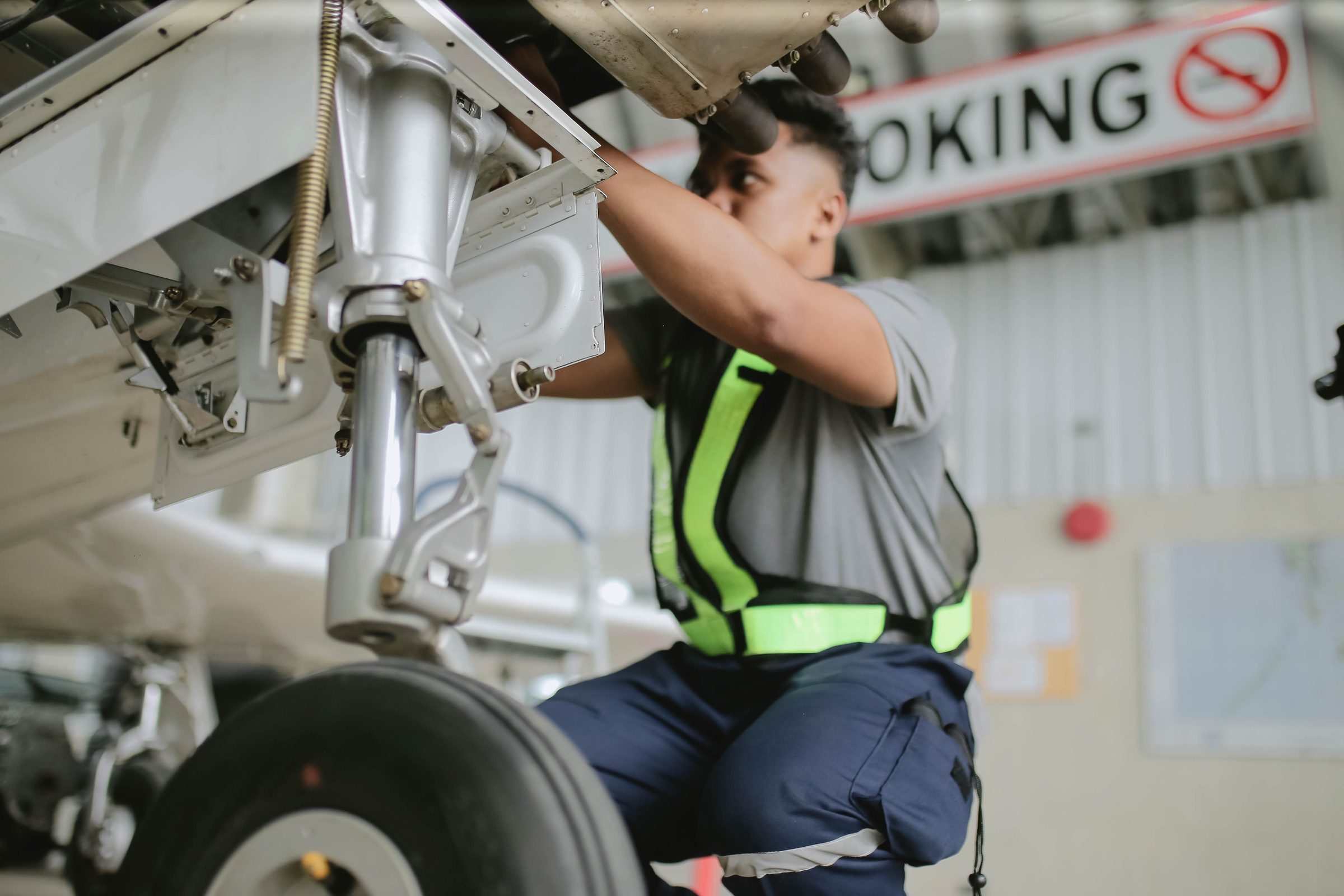
CAAP airworthiness standards are a floor, not a ceiling. Continental Aero maintains detailed records on every airframe, every engine, and every component in the Kryvox maintenance log.
Pre-flight inspection before every dispatch
Every aircraft receives a documented pre-flight walk-around before every training flight. Discrepancies are logged in Kryvox and cleared before release.
Scheduled maintenance on manufacturer cycles
50-hour, 100-hour, and annual inspections per each airframe's type certificate. All maintenance performed or supervised by CAAP-licensed aviation mechanics.
MT 4-blade propeller upgrade on Baron 58
Our multi-engine trainer runs MT 4-blade composite propellers — a maintenance upgrade from the OEM configuration. Smoother, quieter, and substantially more durable.
Two signatures stand
behind every zero.
A zero-accident record is not maintained by a document. It is maintained by the two people CAAP holds directly accountable — the Safety Manager who signs off on the risk posture of every flight, and the Chief Mechanic who signs off on the airworthiness of every aircraft.
Air Agency Certificate 84-11
Capt. Van Vincent Baguio
Named Safety Manager on Continental Aero's active CAAP Training Specifications. Owns the Safety Management System — hazard identification, risk assessment, incident reporting, and the annual safety audit submitted to CAAP. Every go/no-go decision on marginal-weather days routes through this role.
License 128327-AMT
Mr. Bill G. Sabio
Named Chief Mechanic on Continental Aero's active CAAP Training Specifications. Owns airframe and powerplant airworthiness for the full fleet — C-172 RP-C2260, C-172M RP-C5008, Beechcraft BE58 RP-C3606, PA-32-260 RP-C2872. No aircraft releases for training flight without a signed discrepancy clearance from this role.
Zero is a verb.
Maintaining a zero-accident record across 46 years requires continuous work. This is what that work looks like, day by day.
Zero isn't luck.
Luck is a streak. Culture is what happens after the streak ends. A zero-accident record across 46 years is not a number we reached. It is a number we chose to continue, one flight, one debrief, one dispatch clearance at a time.
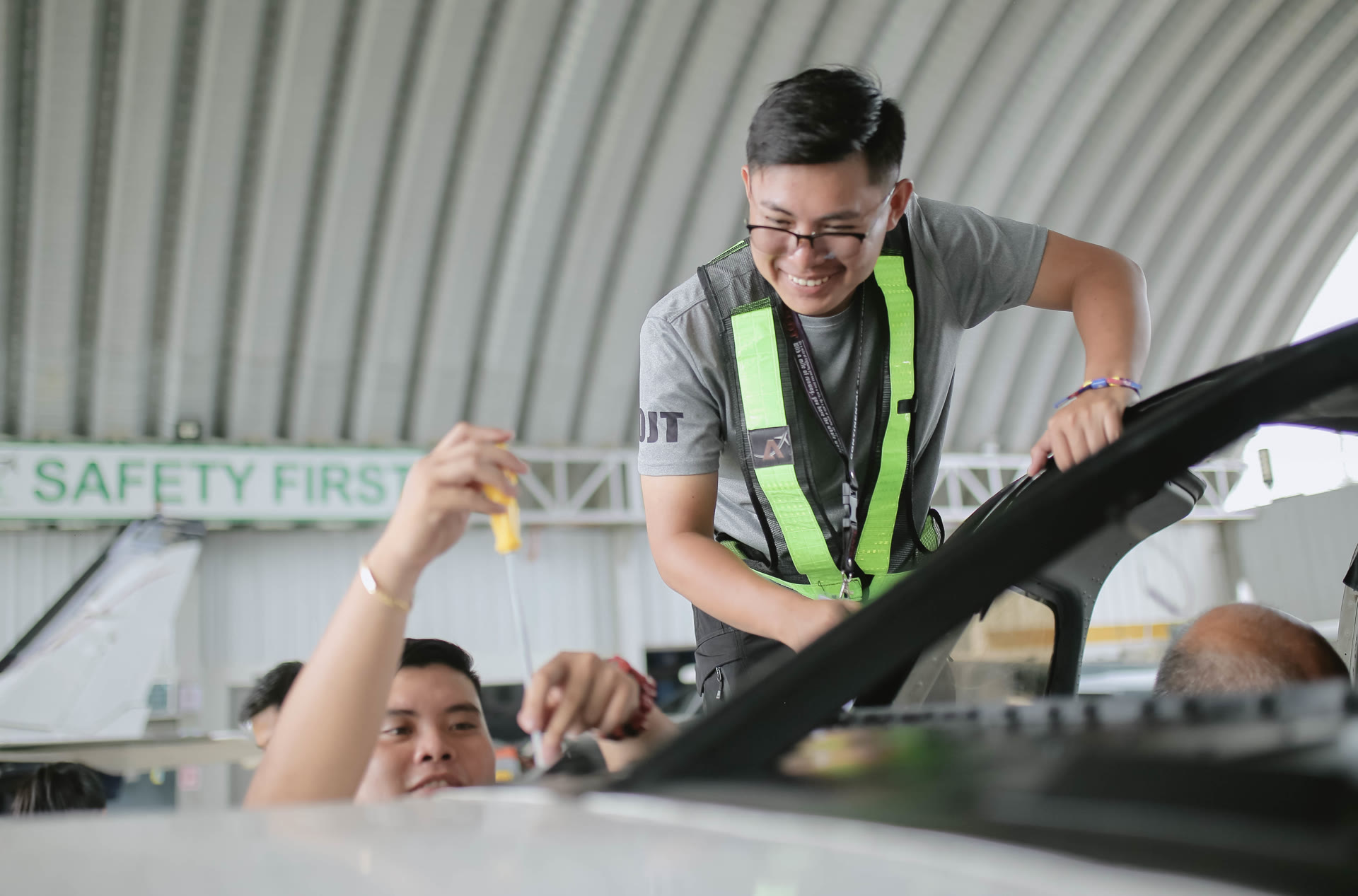
Train where safety is the standard, not the selling point.
Apply for our Cadet Pilot Program or book a campus tour to meet the instructors who maintain the record.