Skip to content
Our Story
1980

The Philippines' longest-running flight school.

Forty-six years of continuous pilot training. Thousands of pilots in cockpits across Asia-Pacific. One record, one mission, one school.

Some flight schools open to catch a market. We opened because the Philippines needed pilots — and forty-six years later, that need is larger, not smaller. We haven't changed the mission. We've changed the tools, the aircraft, the airports we train at, and the airlines we send graduates to. The mission has stayed still.

— Continental Aero Flying School Est. 1980 · Philippines
1980 — Founding

The first class,
and why it mattered.

1986 — 2nd Commencement Exercises, Continental Aero Flying School
2nd Commencement Exercises 1986
2003 — 4th Commencement Exercises, CAFS cadet cohort
4th Commencement Exercises 2003

Continental Aero Flying School was founded in 1980 as one of the first flying clubs in the Philippines. The country then had a handful of aviation training programs, most tied to the military. Civilian pilots — the kind who would one day fly for Philippine Airlines or Cebu Pacific — had few options outside the government system.

In 1984, the Civil Aviation Authority of the Philippines issued Air Agency Certificate No. 84-11 — making CAFS one of the earliest CAAP-accredited flight schools in the country. That certificate has stayed with us, renewed continuously, for forty-two years.

Two years later, in 1986, the school was renamed Continental Aero Flying School and expanded to three aerodromes — Iloilo, Cebu, and Davao. The mission from 1980 carried through: train pilots who can fly professionally, safely, repeatedly.

Three decades of pilot training followed. Students came, earned licenses, went on to airlines. The fleet grew. The facilities expanded. What didn't change was the insistence that every flight ended with the aircraft in the same shape it started. That discipline — repeated thousands of times — is how a school accumulates forty-six years with zero training accidents.

By the early 2010s, CAFS's founding ownership was winding down operations after more than three decades. Rather than close the school, the founding owner chose to entrust it to Capt. Jithin Bhadran — a working airline captain whose integrity and maintenance standards could carry the legacy forward. The handoff was made on the basis of integrity, not commercial terms. The Continental Aero Flying School name and CAAP Certificate No. 84-11 were both preserved, deliberately — continuity, not rebrand. Fourteen years later, every bolt replaced on every aircraft is still a genuine part. That's the discipline the founding owner was looking for when the call was made.

Forty-Six Years

A history you can verify,
not a story we tell.

Key dates in the CAFS timeline — confirmed milestones from CAAP records and company archives.

1980
Founded as one of the first flying clubs in the Philippines
Private flight training operations begin. A civilian alternative to military-linked training programs.
1984
CAAP Air Agency Certificate No. 84-11 issued
One of the earliest CAAP-accredited flight schools in the Philippines. Certificate maintained continuously to date.
1986
Renamed "Continental Aero Flying School"
School expanded to three aerodromes — Iloilo, Cebu, and Davao. The name and the mission settled into their current form.
2011
Capt. Jithin accepts stewardship
The founding ownership chooses Capt. Jithin Bhadran — a working airline captain with thousands of flight hours — to continue the school rather than wind it down. The handoff is made on the basis of integrity, not commercial terms, with the explicit wish that the training legacy continue.
2012
Relocation to Mactan-Cebu International Airport
Training operations consolidate at MCIA — a Class-C international airport with live commercial jet traffic. The Continental Aero Flying School name and CAAP Certificate No. 84-11 are both preserved, deliberately — continuity, not rebrand. Fleet modernization, international standards alignment, and instructor hiring from airline backgrounds begin this year.
2019
CAAP Plaque of Recognition awarded
Formal recognition for the zero-accident record from 2015–2019. A marker of the safety and training standards sustained through the MCIA era.
2026
Forty-six years of continuous operation
Zero training accidents. CAAP 84-11 active. International cohorts from 14+ countries. Graduates flying for airlines across Asia-Pacific, the Middle East, and beyond.
MCIA · Mactan-Cebu International
Why Cebu · Why MCIA

Training is shaped
by where you do it.

01
Year-round flying weather
The Philippines' equatorial climate means training days lost to weather are dramatically fewer than in Europe or North America. Students log flight hours consistently, finish programs on schedule.
02
Class-C international airspace
MCIA is a live, busy Class-C airport with commercial jet traffic alongside training operations. Radio discipline, IFR procedures, airline-grade dispatch — drilled into muscle memory, not taught from a textbook.
03
A national network of aerodromes
Cross-country training takes students across the Philippines — island strips, mountain approaches, coastal fields. Every sortie shapes a different kind of decision.
04
Favorable cost structure
Philippine operating costs enable a full airline-track program at roughly 55-65% less than CAE Oxford (UK) or L3Harris (UK/US). Not because we cut corners — because our economics are structurally different.
Today, 2026

What forty-six years built.

Numbers as of 2026.

The first forty-six years earned a reputation — one student, one flight, one maintenance cycle at a time. The next chapter builds the systems to match it: an operational platform, a cadet-ready pipeline, campuses beyond Cebu. Quality carried us here. Systems carry us forward.

0yrs
Continuous Operation
0
Training AccidentsIndependently verifiable via CAAP
0+
Countries Represented in Alumni
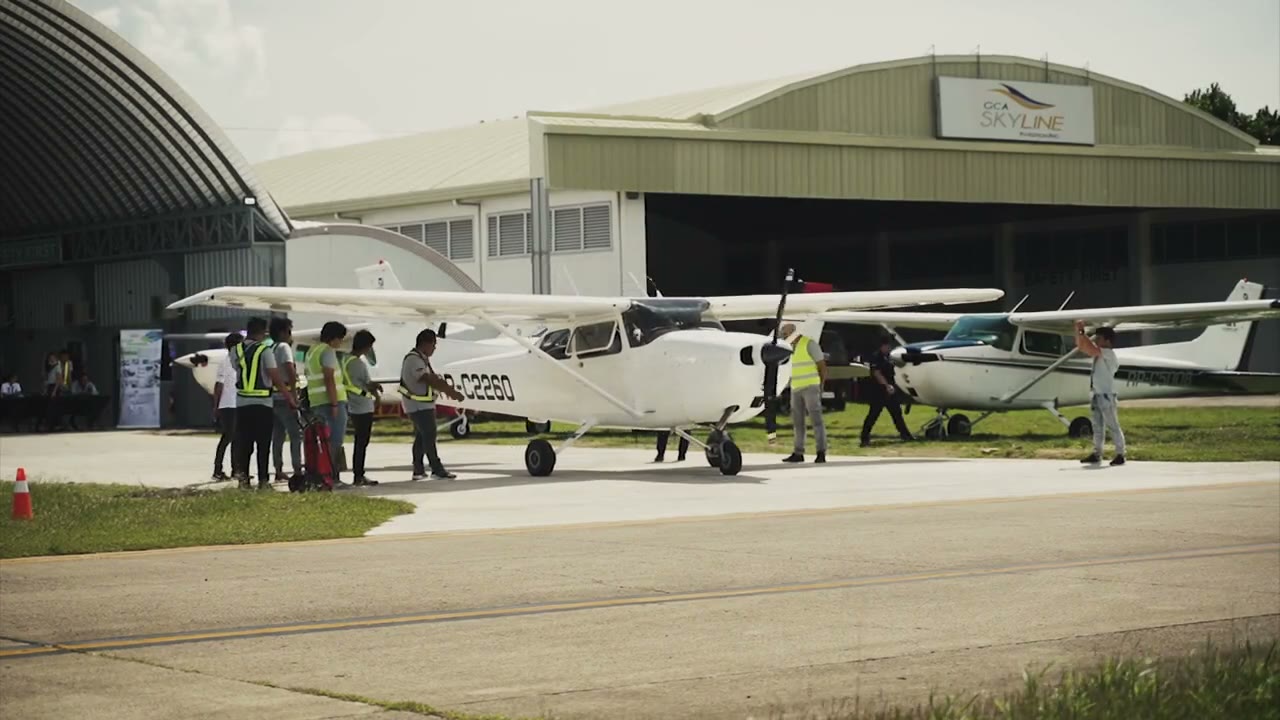
Inaugural event — CAFS hangar and training facility expansion, Mactan-Cebu
Hangar Inauguration · MCIA 7:02
Leadership

Captains who fly
teach the people who will.

Our leadership isn't a board of advisors or former aviation executives. They are working pilots with thousands of hours, sitting in the left seat of aircraft that airlines put fare-paying passengers behind.

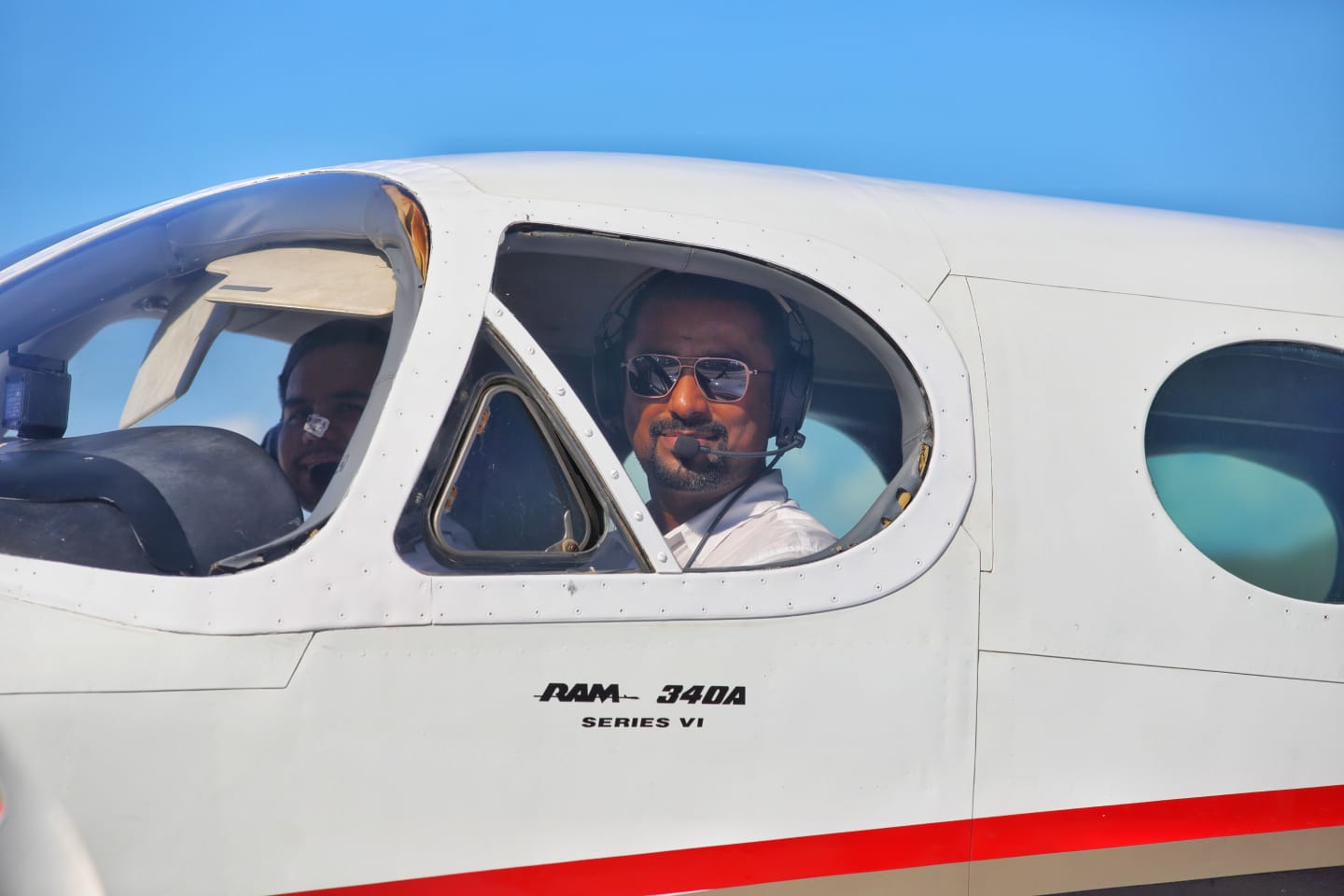
Capt. Jithin J. Bhadran — CEO and Chief Flight Instructor, Continental Aero Flying School
CEO · Chief Flight Instructor
Capt. Jithin J. Bhadran
CAAP 104616-FI · ATP · working airline captain

Took ownership of Continental Aero in 2011. Still flying the line as an airline captain while leading the school's training authority.

Flip
CEO · Chief Flight Instructor
Capt. Jithin J. Bhadran

Took ownership of Continental Aero in 2011 while still flying the line as an airline captain. Led the 2012 consolidation of operations at Mactan-Cebu International, fleet modernization, and the establishment of the international cadet pipeline. Holds the school's Chief Flight Instructor authority under CAAP ATO 84-11.

  • CAAP License104616-FI (ATP · CFI)
  • ATOC 84-11 RoleChief Flight Instructor
  • RoleWorking airline captain
  • OwnershipSince 2011
Capt. Daryl Lester C. Ancheta — Head of Training, Continental Aero Flying School
Head of Training
Capt. Daryl Lester C. Ancheta
CAAP 112342-FI · CPL · ME · IFR · FI

Runs the training department day-to-day at Mactan-Cebu. Signs off first solos, first cross-countries, and every final CPL check ride.

Flip
Head of Training
Capt. Daryl Lester C. Ancheta

Head of Training under CAAP ATO 84-11. Runs syllabus execution, student progression, and every major gate sign-off — first solos, first cross-country flights, and final CPL check rides — out of Mactan-Cebu International.

  • CAAP License112342-FI
  • ATOC 84-11 RoleHead of Training
  • RatingsCPL · ME · IFR · FI
  • BaseMactan-Cebu International

Forty-six years of arrivals.
Yours is next.

Our story is forty-six years of pilots walking out with licenses. The next chapter is yours to write.