Skip to content
Investment Tier 4 Flagship · Integrated Pipeline
International Airline Cadet Pilot Program

From zero hours
to airline-ready. In eighteen months at Mactan-Cebu.

A structured, ICAO-aligned pathway to a professional pilot career. Live Class-C airport training from day one. Direct cadet pipeline to Skyway Airlines and partner Asia-Pacific carriers.
Next cohort intake: June 2026 · Rolling applications
46yrs
Training Since 1980
0
Training Accidents
CAAP
Cert No. 84-11
Cadet Pipeline Partner

What makes a cadet program work is not the number of hours. It is the path between them. Eighteen months from your first walk-around to your first airline-ready checkride — structured so each stage earns the next, each license compounds, each flight builds the judgment that airlines will one day put fare-paying passengers behind.

— Continental Aero Flying School Est. 1980 · Mactan-Cebu · Philippines
The Eighteen-Month Path

Six phases.
One continuous path.

ICAO-aligned. CAAP-approved. Each phase feeds the next — no gaps, no re-learning, no cohort transfers between schools.

01
Foundation
Ground School
Month 1–3
ATPL theory core. Aerodynamics, navigation, meteorology, regulations. 750+ hours of academic instruction.
02
First License
Private Pilot
Month 3–6
PPL earned. Solo cross-country, radio work, night operations. First time in full command of an aircraft.
03
Commercial
Commercial Pilot
Month 6–11
CPL earned. Advanced maneuvers, complex aircraft, commercial standards. Flying to airline-grade precision.
04
Instrument
Instrument Rating
Month 11–14
IR earned. Flying by reference to instruments. IFR procedures, approach plates, ATC coordination in IMC.
05
Multi-Engine
ME Rating
Month 14–16
ME added. Transition to Baron 58. Engine-out procedures, asymmetric thrust, complex systems management.
06
Airline Prep
Frozen ATPL + MCC
Month 16–18
Frozen ATPL. Multi-Crew Cooperation. Airline orientation. Interview preparation. Ready for the right seat.
18mo
Total Duration
200+ hrs
Flight Time
750+ hrs
Ground School
5
Licenses Earned
What You Earn

Five licenses.
One cohesive credential stack.

Every license is CAAP-issued and ICAO-recognized. Convertible to EASA (Europe), FAA (USA), and CASA (Australia) pathways with bridge training.

PPL
PPL
Private Pilot License
Single-engine land. Command authority for private operations. First genuine license in your logbook.
CPL
CPL
Commercial Pilot License
Authorization to fly for compensation. The threshold license for any professional pilot career.
IR
IR
Instrument Rating
Fly in IMC. Shoot approaches in weather. Mandatory for any commercial airline role.
ME
ME
Multi-Engine Rating
Command of multi-engine aircraft. Required for airline transport operations. Trained on Baron 58.
ATPL
ATPL
Frozen ATPL
Airline Transport Pilot theory complete. Unfreezes to full ATPL after required hours with your employing airline.
Flight Time Composition

Where your 200 hours come from.

Hours are not interchangeable. Dual instruction builds judgment. Solo builds command. Simulator builds precision. Cross-country builds navigation fluency. The mix matters as much as the total.

200+ hours
100h
60h
30h
10h
100h
Dual Instruction
Alongside a CAAP-certified instructor. Every maneuver demonstrated, practiced, corrected. Your judgment is built here.
60h
Solo Flight
Pilot-in-command authority. No instructor on board. Cross-country and pattern solos. Command is built here.
30h
FNPT II Simulator
Full motion flight simulator. Emergency procedures, instrument approaches, scenarios you cannot safely practice in live aircraft.
10h
Night + Advanced
Night operations, advanced navigation, cross-border cross-country. The profile components that airlines explicitly require.
Direct Airline Pipeline

A finish line, not a guess.

Most flight schools end at CPL. Continental Aero cadets are connected to the next step — a direct pipeline to Skyway Airlines and priority access to partner Asia-Pacific carriers, formalized through our 2025 Memorandum of Understanding.

Direct cadet pipeline to Skyway Airlines — formalized through MOU, not a referral hope
Type-rating coordination for onboarding to carrier fleet
First-officer placement priority for program graduates who meet carrier standards
Interview coaching during final program phase — taught by airline captains
100+
Daily Movements
at MCIA

Why training at a live international airport matters.

Every cadet flies alongside 100+ daily commercial movements at Mactan-Cebu — a Class-C airport under ATC radar control. By graduation, the airline environment is your home, not your adjustment.

Your Training Tools

Built for the modern cadet.

The platform your airline uses looks a lot like the one we train you on. Intentional.

Proprietary Digital Platform

Kryvox

Digital logbook, AI-assisted scheduling, real-time progress tracking, SMS dispatch. Every flight, every hour, every milestone — logged, reviewable, exportable to your airline employer on day one.

Digital Logbook
CAAP-compliant, exportable to airline onboarding
AI Scheduling
Intelligent weather + aircraft + instructor matching
IMSAFE Dispatch
Safety check enforced before every flight
Progress Dashboard
Every stage, every endorsement, instructor-visible
Training Fleet

Aircraft airlines recognize.

Train on the same general-aviation platforms that airline interview panels understand. Fleet maintained to CAAP airworthiness standards with Baron 58 running MT 4-blade composite props.

Cessna 172
Trainer
Cessna 210
Complex
Baron 58
Multi-Engine
Full fleet details
Who Succeeds · How to Apply

Straightforward. Fast.
No gatekeeping.

Most applicants receive a decision within two weeks of submission. Selection is based on aptitude, commitment, and English proficiency — not connections.

Requirements

Age18 or older at program start
EducationHigh school diploma or equivalent
EnglishICAO Level 4 minimum · Level 5+ preferred
MedicalCAAP Class 1 Medical Certificate
Prior hoursNot required · ab initio welcome
Cohort sizeSmall cohorts · instructor ratio preserved
VisaStudent visa support for international applicants

Application Process

Step 01
Submit application
15 min online
Step 02
Aptitude + English assessment
Within 1 week
Step 03
Interview with Head of Training
Video or in-person
Step 04
Medical + documentation
CAAP Class 1
Step 05
Offer + enrollment
Cohort placement
The Cadet Pilot Pathway

Two phases. One home base.
One pilot the airlines compete for.

Cadet Pilot is structured in two phases — foundation, then advanced — all delivered from our home hangar at Mactan-Cebu under CAAP certification. You build your hours in live Class-C airspace and across 30+ aerodromes in the Philippine archipelago, so no two cross-countries are alike. Every license is CAAP-issued and ICAO-recognized — accepted across all 193 ICAO member states, convertible to FAA, EASA, and CASA with bridge training.

Foundation in Philippine skies

  • Class-C controlled airspace from hour one
  • Stable tropical weather · consistent flying days
  • ICAO-English ATC environment
  • CAAP certification
  • The environment that catches weak radio work.

Advanced cross-country & instrument

  • 30+ aerodromes · long archipelago cross-countries
  • Changing coastal & island weather · rapid judgment
  • IFR-rich airspace · multi-engine and instrument time
  • CAAP certification · ICAO-recognized
  • The environment that catches weak judgment.

An airline career isn't a weekend license. Cadet Pilot is built for students committed to the flight deck — full integrated hours, real ATC, and an airline-ready logbook from day one.

Quality isn't what gets cut when you price something well.

Another Path · Same Flight Deck

Not every pilot starts as a cadet.

Cadet selection is capacity-limited by airline pipeline seats — the Modular track isn't. If this intake is full, if you prefer to build licenses at your own pace, or if you'd like to enter at the PPL stage first, the Modular path trains to the same CAAP standards, on the same fleet, with the same instructors. License by license — PPL, CPL, Instrument, Multi-Engine. You can apply cadet again on any future intake, and every modular hour you fly counts toward your total.
See the Modular track Try a Discovery Flight first
Not sure which path fits? Start with a Discovery Flight — one hour at the controls tells you more than any brochure.
Frequently Asked

The questions we get most.

18–24 months full-time from zero to Frozen ATPL. Most cohorts finish within 18–22 months; the extra window absorbs weather, medical scheduling, and individual checkride pacing. The program is cohort-based, not self-paced — steady progression is part of the design.
Yes. The program is ab initio — designed for students with zero flight hours. No prior aviation background is required or expected. Existing pilots seeking CPL/IR/ME upgrades should look at our Training Pathways modular tracks instead.
Yes. Our International Admissions team supports student visa applications, airport pickup, orientation, and pre-vetted housing options in Cebu (average $400-600/month). Applicants from 14 countries have enrolled in the past five years.
Placement depends on each graduate's individual performance, hour accumulation, and interview outcomes — so we don't publish a single headline figure. What we do publish: our Skyway Airlines MOU provides a direct cadet-to-first-officer pipeline for qualifying graduates, and alumni are actively flying for Cebu Pacific, Philippine Airlines, AirAsia Philippines, Korean Air, and Emirates.
All licenses are CAAP-issued and ICAO-recognized, which means they are accepted in all 193 ICAO member states. Conversion to specific national licenses (EASA for Europe, FAA for the USA, CASA for Australia) requires bridge training — which we can advise on during your program.
Our next intake is scheduled for June 2026. We run cohorts approximately every 4 months. Applications are accepted on a rolling basis — earlier applications receive earlier interview slots and cohort placement priority.
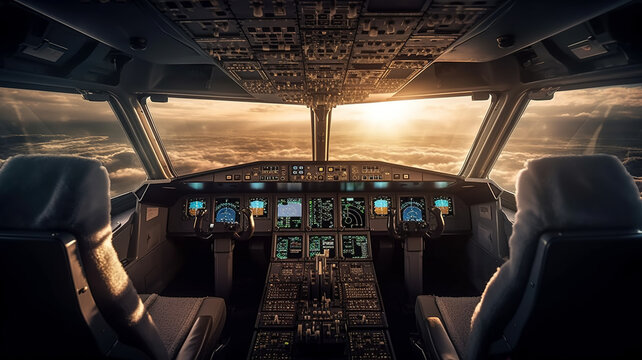
Airline flight deck at sunset above the clouds — the seat every CAFS cadet earns.
Next Cohort Intake · June 2026

Your airline seat begins here.

Apply for our next cohort — or start smaller with a Discovery Flight to feel what real airline-track training looks like.