Skip to content
Training Fleet · Mactan-Cebu

The aircraft that earn
the airlines' attention.

Four airframes. One progression. From a Cessna 152 on your first solo to a Beechcraft Baron 58 on your multi-engine checkride — every hour logged here is an hour airline interview panels recognise.

Scroll

A training fleet is not a list of aircraft on a brochure. It is the sequence of cockpits a student grows up through — each one a chapter the next employer will read in a logbook.

— Continental Aero Flying School Hangar 11 · Mactan-Cebu
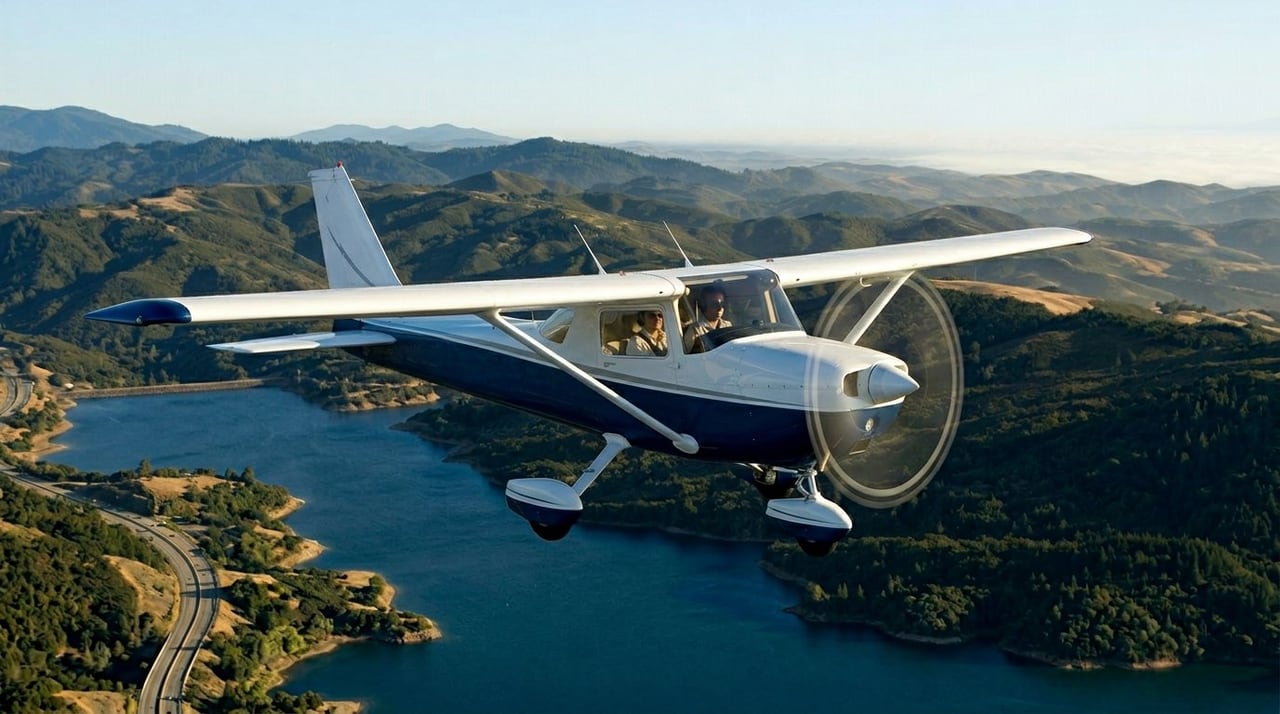
Cessna 152 basic trainer
No. 01 · Cessna 152

Two seats.
One first solo.

The aircraft where you learn that the controls actually work — and that the airplane will tell you what it needs, if you listen.

Smaller and lighter than the Skyhawk, the 152 is purpose-built for the earliest lessons of pilot training. Slow flight. Stalls. Pattern discipline. The radio call you've rehearsed in your head fifty times. The walk-around you don't yet trust yourself to do alone.

What the 152 lacks in payload it makes up for in honesty. Every input gives an immediate, proportional response. Mistakes are obvious. Corrections are clear. By the time a student transitions to the 172, the fundamentals are airline-grade.

Configuration
2-seat single
Engine
Lyc O-235 · 0 HP
Cruise
~0 KIAS
Stall (clean)
0 KIAS
No. 02 · Cessna 172 Skyhawk

The most-produced aircraft
in aviation history.

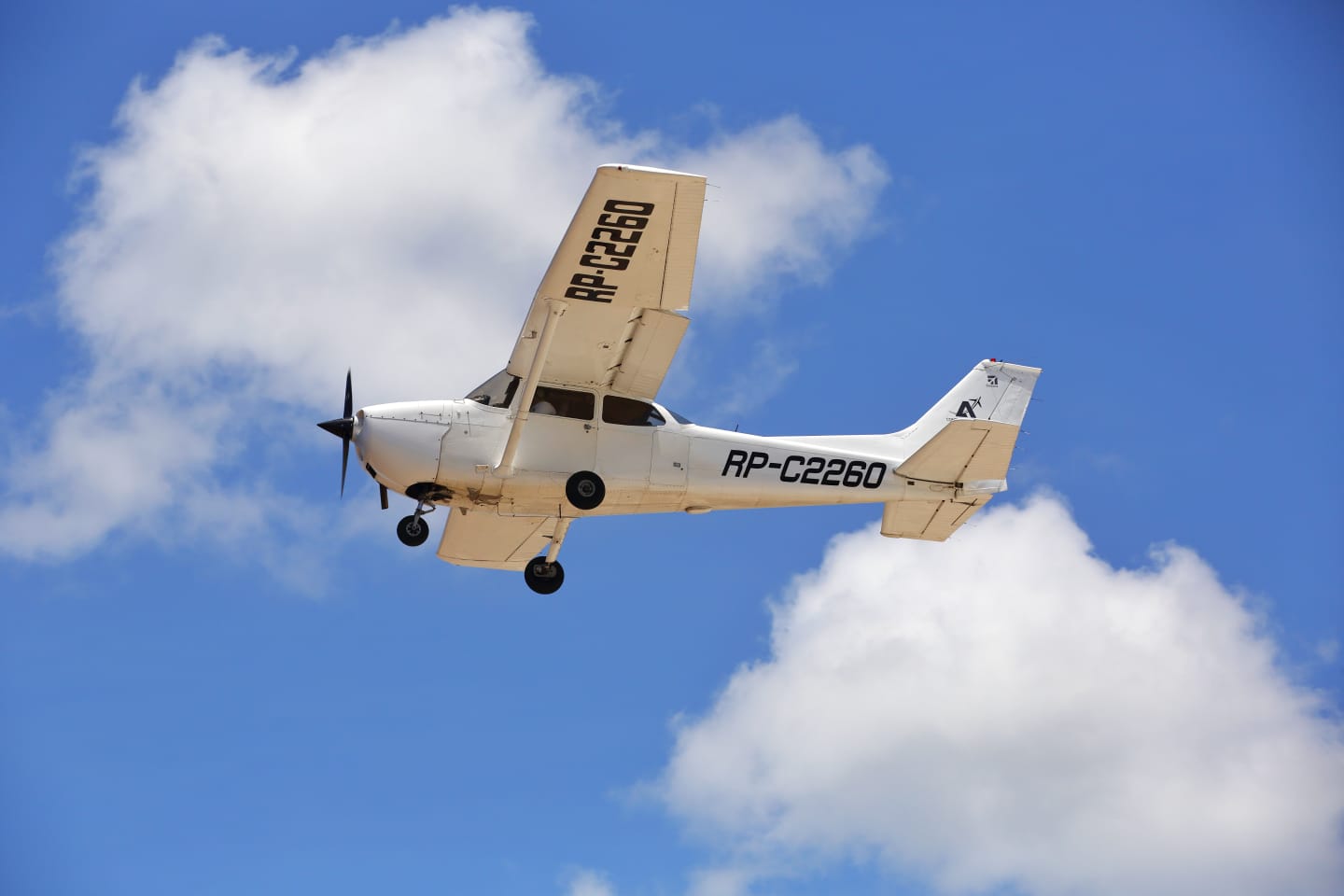
The high-wing four-seater that taught more commercial pilots to fly than any other airframe. Same model used worldwide — every hour you log here counts toward ICAO recognition in 193 member states.

Why airlines recognise it

Forgiving handling, predictable behaviour, bulletproof reliability. The 172 is the airframe a student earns their PPL on, builds CPL hours on, and runs cross-country navigation across the Visayas with. It is the aircraft every airline interview panel knows by heart.

Where it earns its hours

Live Class-C airspace at MCIA. ATC radar separation from day one. The same environment a student will fly in on their first regional first-officer assignment — except they'll already be fluent in it.

PPL Training CPL Time Build Solo Cross-Country Discovery Flight
No. 03 · Beechcraft Baron 58

Where flying
becomes operating.

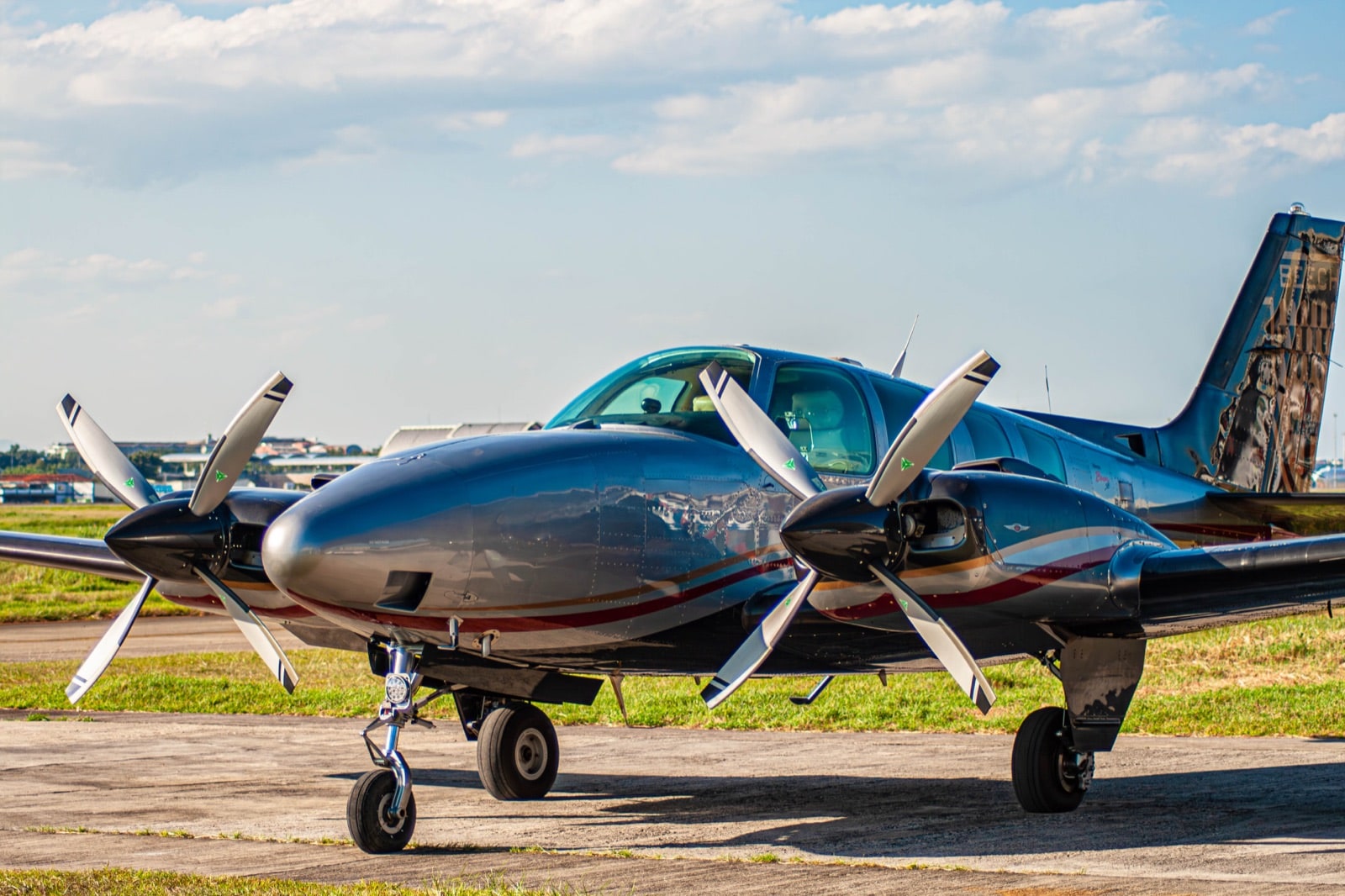
Twin Continental IO-520-C engines. Retractable gear. The asymmetric thrust scenarios every airline first officer is asked to handle on their first line check.

The Baron 58 is the airframe where a student becomes a candidate for airline first officer. Engine failure on takeoff. Critical engine recognition. VMC demonstration. Single-engine ILS in marginal weather. Crossfeed configuration.

These are the procedures that separate hour-builders from airline-ready pilots — flown here, on a real Baron, in real Class-C airspace.

0HP
Per Engine
Continental IO-520-C, twice over.
0lbs
Maximum Takeoff
Real weight management at every brief.
0KIAS
VYSE
Best rate of climb, one engine inoperative.
0KIAS
VMC
Minimum control speed — the number you respect.
37′10″
Wingspan
Substantial, deliberate, twin-engine bearing.
0USG
Useful Fuel
Range that turns the Visayas into a backyard.
0KIAS
VNE
Never-exceed, observed always.
6
Seats · Retractable Gear
Complex aircraft endorsement on type.
Maintenance Upgrade · Above OEM

MT 4-blade composite propellers.

Continental Aero's Baron 58 runs MT 4-blade composite propellers — a maintenance upgrade above the original Beechcraft configuration. Smoother, quieter, more durable. The kind of detail that doesn't appear in the brochure but shows up in every flight.

The Specialty Fleet

Two airframes.
One transition to airline complexity.

Between the Baron and the airline cockpit lies one bridge: high-performance singles with retractable gear, and pressurized twins with turbocharged systems. These two Cessna platforms close that gap — not as primary trainers, but as the aircraft where students first operate the systems, speeds, and altitudes they will see on the line.

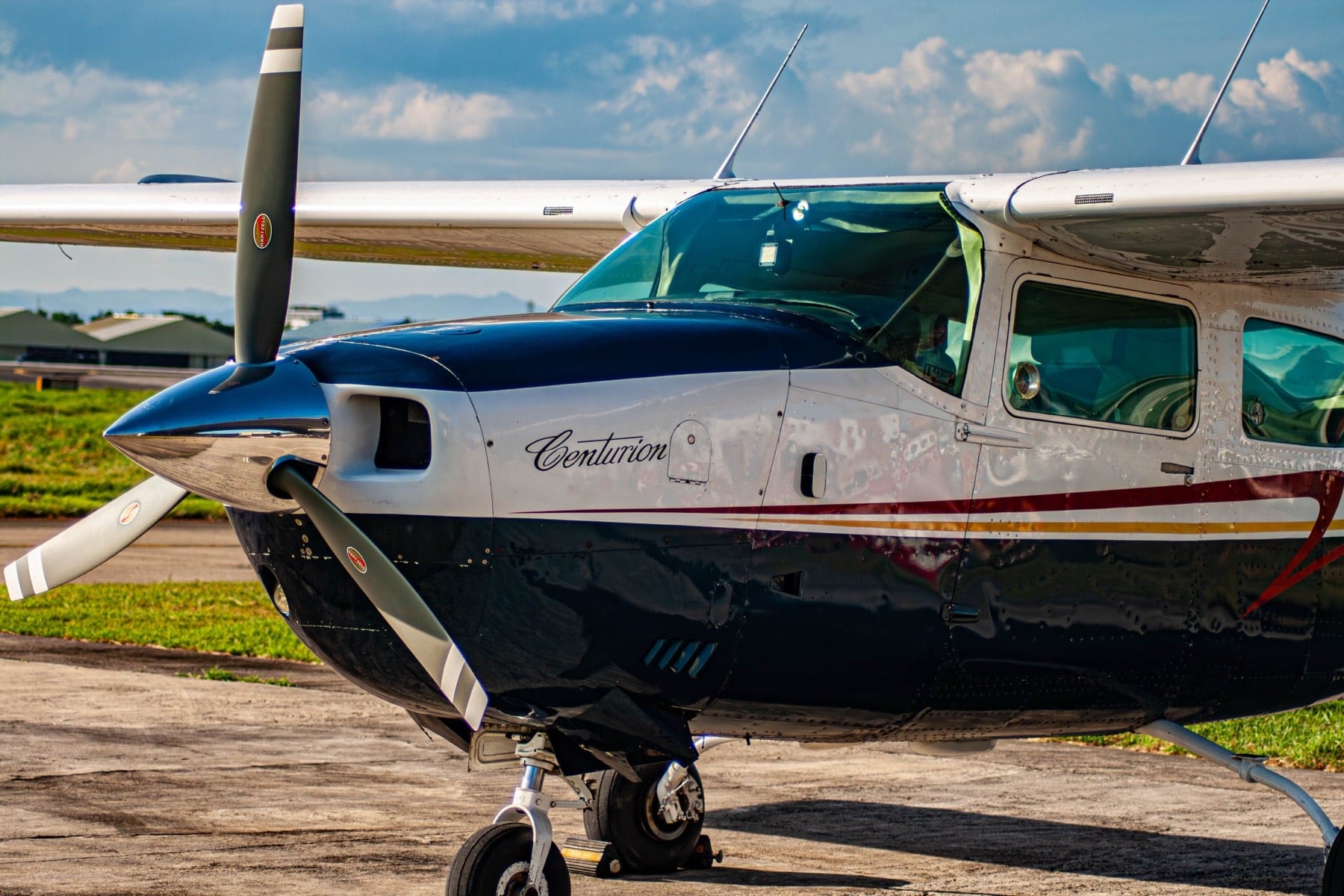
Cessna 210 Centurion — 3/4 front, three-blade propeller, 'Centurion' wordmark on fuselage
No. 03 · Cessna 210 Centurion

High-performance single.

Six seats. Retractable gear. The Centurion teaches a student what a commercial pilot actually signs for — a complex endorsement that sits on every ICAO CPL logbook and opens hours on the airframes charter operators fly.

The 210 is the aircraft where speed, load, and systems start to feel like real commercial operations. Gear up, gear down, cowl flaps, manifold pressure. At cruise, it burns through cross-country miles that the Skyhawk would take half again as long to cover — typically five hours on 90 gallons.

This is where students build hours that airlines respect: cross-country, complex, multi-condition. Not the most-flown aircraft in the fleet — it doesn't need to be — but the one that widens the logbook when the interview is next.

Configuration
6-seat single · retractable
Engine
Continental IO-520 · turbo-normalized
Range
~5 hrs · ~90 gal
Endorsement
Complex · high-performance
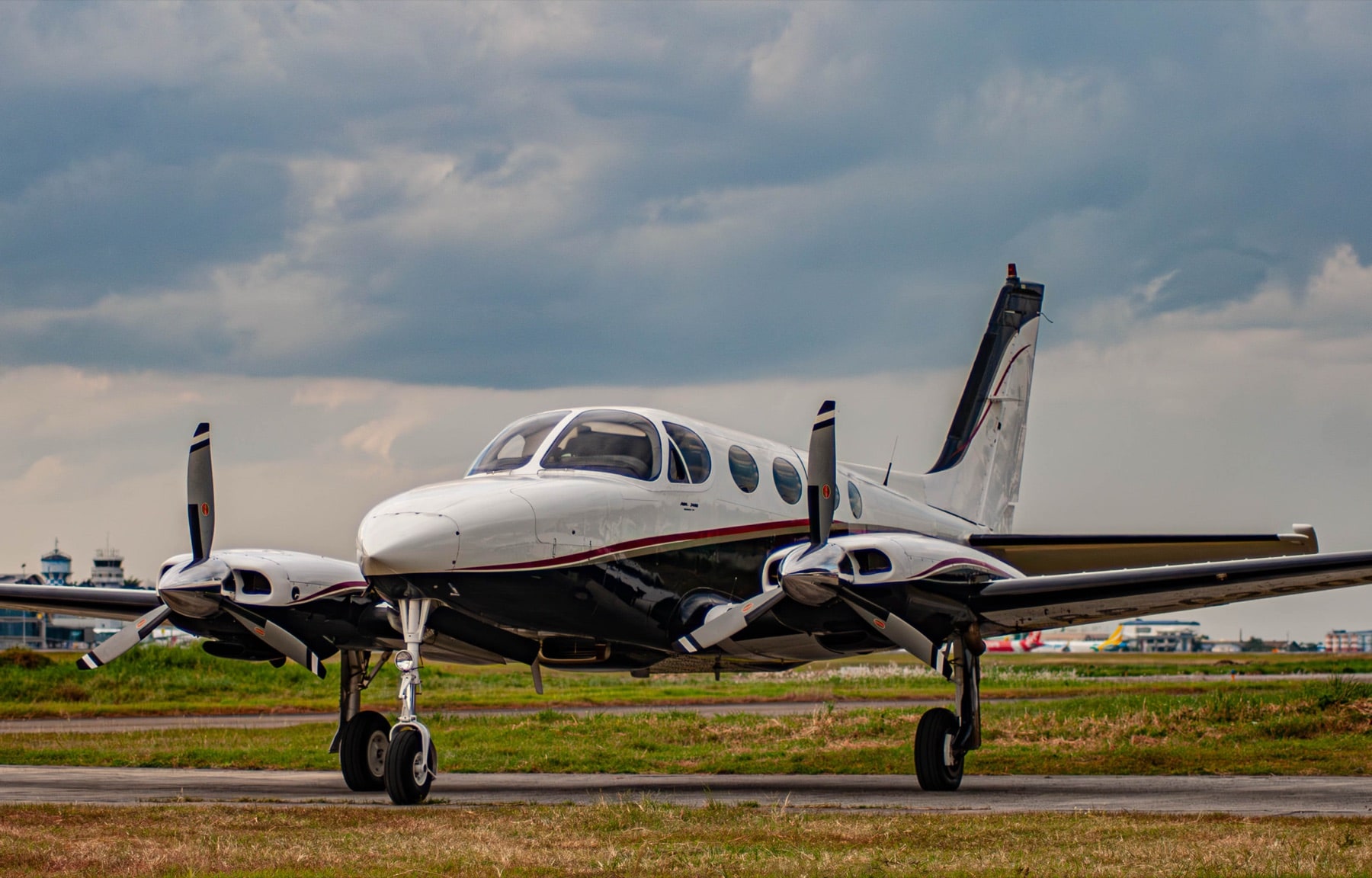
Cessna 340 on MCIA apron at dusk — pressurized twin with cloudy sky backdrop, MCIA control tower in the distance
No. 05 · Cessna 340

Pressurized twin.

Six seats. Two turbocharged engines. A sealed cabin that climbs above the weather rather than through it. The 340 is the aircraft where a student first operates the systems an airline first officer manages every day — pressurization, oxygen, bleed-air, and flight-level cruise.

Where the Baron teaches asymmetric thrust and engine-out procedures, the 340 teaches cabin-altitude management, pressurization schedules, and the differences a pilot has to notice above FL250. The cockpit workload is heavier; the margin for a missed checklist item is thinner.

This is the platform CAFS uses for airline-transition prep. Cadets who progress to type-rating training at partner airlines arrive already fluent in the systems language the sim instructor is about to use.

Configuration
6-seat twin · pressurized
Engines
2 × Continental TSIO-520 · turbocharged
Service ceiling
Above FL250 · oxygen optional with pressurization
Endorsement
Pressurized · complex · ME transition

The 210 and 340 are specialty aircraft — used for specific endorsements and airline-transition phases, not primary training. Primary pilot development runs through the 152, 172, and Baron platforms above.

No. 04 · Elite PI-135 / FNPT II

Where instrument flying becomes
muscle memory.

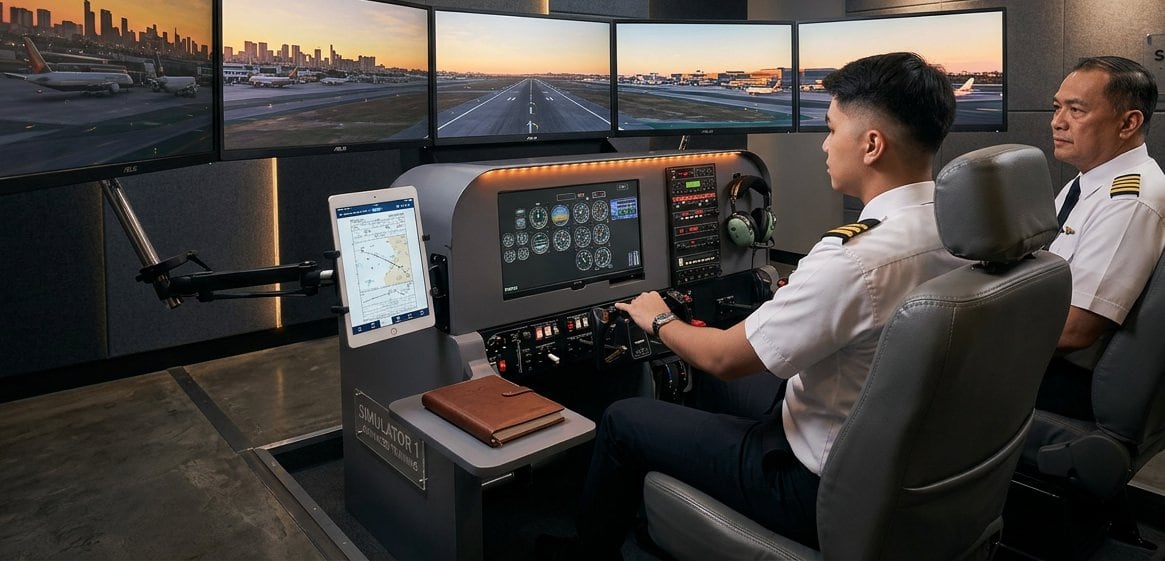
Real airline pilots don't learn instrument flying in the air. They rehearse it on the ground, thousands of times, until the scan becomes automatic.

The Elite PI-135 is an FNPT II category trainer — the same simulator class that EASA, CAAP, and ICAO recognise for instrument time logging. Wind shear, engine failure on go-around, partial panel approach, single-engine missed in IMC: every scenario you'd never intentionally fly into, rehearsed until your hands move without thinking.

Authority Recognition
FNPT II Category
Flight Navigation Procedures Trainer · Level II
CAAP Approved
Instrument time loggable toward IR
EASA + ICAO Recognition
Hours convertible across jurisdictions with bridge training
SE / ME Configurations
Single and multi-engine procedures, including MCC
The Progression

From 10 hours to airline-ready,
across one fleet.

The fleet isn't a collection — it's a curriculum sequenced by airframe. Each transition is a milestone an airline interview panel will ask you about.

Cessna 152
0+
Hours
Cessna 152
First solo. Pattern discipline. Slow flight.
Cessna 172
0+
Hours
Cessna 172
PPL checkride. Solo cross-country across the Visayas.
FNPT II Simulator
0+
Hours
+ FNPT II
Instrument Rating. Approach plates. Procedures discipline.
Beechcraft Baron 58
0+
Hours
Baron 58
Multi-engine rating. Airline application package complete.
The Release Sequence

An aircraft doesn't
fly itself.

Every flight passes through a sequence of release checkpoints before the engine starts. Forty-six years and zero training accidents is the outcome of this sequence — repeated, signed off, every time.

No checkpoint, no clearance, no aircraft
Step 01 · Scheduled

100-hour & annual inspection.

Every 100 flight hours, every aircraft comes out of rotation for a full inspection. Annual goes deeper. CAAP-approved AMO, in-house engineering, full part traceability in Kryvox.

Cycle · Every 100 FH
Step 02 · Pre-flight

Walk-around · every flight.

No flight leaves the ramp without a documented walk-around by both instructor and student. Weight & balance computed. NOTAMs reviewed. Weather minimums verified by dispatch.

Owner · Dispatch + Instructor
Step 03 · Continuous

Squawk reporting · same day.

Any student or instructor can flag a discrepancy. It's logged in Kryvox the moment it's noticed, routed to maintenance, and the aircraft is grounded until cleared. No "fly it and see" culture.

Resolution · Within 24 hours
Step 04 · Authority

Dispatch release.

Final clearance signed by dispatch. Pilot in command receives the release. The aircraft is now airworthy for this flight, on this plan, with this crew. Engine start authorised.

Authority · Dispatch · CAAP-compliant
Hangar 11 · MCIA General Aviation

Six rooms behind every flight.

An aircraft isn't just the airframe on the ramp. It's a conference room where partnerships are signed, a classroom where theory becomes instinct, a maintenance bay where tolerances are measured in thousandths, and an avionics lab where a glass cockpit is diagnosed before it ever flies again. Here are the six rooms your child lives between, Monday to Saturday.

01 · Apron-side

The Hangar

Hangar 11 on the General Aviation apron at Mactan-Cebu International. The fleet lives here — Cessna 152s and 172s on one side, the Baron B58 and FNPT II simulator on the other. Morning starts with aircraft pull-out and ends with hangar-in before sunset.

02 · Meeting

Conference Rooms

Seats up to 20 around a central table. Air-conditioned, projector-equipped, AV-ready. This is where airline partnership briefings happen, where parents are walked through the cadet program, and where instructor teams review quarterly safety data.

03 · Rest

Pilot Lounge

A quiet room for pilots between flights — couches, coffee, and a small aviation-merchandise display your child will probably raid on graduation day. Designed for the hour after a debrief when adrenaline and caffeine need somewhere to land.

04 · Study

Classrooms & Briefing Rooms

Air-conditioned, whiteboard-and-projector equipped, seating up to 8. A curated aviation library on the shelf. Ground school happens here — meteorology, navigation, airspace, aerodynamics — and every pre-flight briefing begins with a whiteboard route plan.

05 · Airworthiness

Maintenance Room

Air-conditioned, fully-tooled, staffed by CAAP-licensed aircraft maintenance technicians. Every aircraft passes through here every 100 flight hours for inspection. The tool room alone is the reason our 46-year zero-accident record isn't an accident.

06 · Systems

Avionics Room

A fully air-conditioned facility with specialized tools for maintaining and repairing the electronic systems on modern glass cockpits. GPS, radios, autopilot, transponders. When a pilot keys the mic and ATC hears you, an avionics technician made that possible.

Next Step

A spec sheet doesn't fly.
You do.

The fastest way to understand a training fleet isn't reading about it — it's 45 minutes in the left seat of a Cessna 172, or a hangar visit with the team that keeps the fleet flying.